.png?width=940&height=788&name=American%20Made%20(1).png)
Sliver-Free Rebar: How GatorBar Cuts Risk on Your Jobsites

GatorBar
Why Fiberglass Rebar Slivers Are a Serious Safety and Liability Problem
Sliver-free rebar directly reduces jobsite injuries by eliminating glass splinters that can enter workers’ skin. Traditional fiberglass rebar often sheds sharp fibers when cut or handled, creating preventable hazards that turn into medical claims, downtime, and painful experiences for crews and homeowners.
Glass Fiber Reinforced (GFRP) rebar is fundamentally different from steel. It’s made from continuous glass fibers in a resin matrix. When it’s exposed to the elements, cut, dragged, or mishandled, those fibers can break free and become needle-like slivers. Safety guides for FRP rebar recommend gloves, eye protection, and at least N95-level respiratory protection because of the risk of skin and eye irritation from glass fibers.
Workers’ compensation attorneys also warn that fiberglass exposure can lead to itchy skin rashes, eye irritation, and even respiratory symptoms when dust is inhaled. On a concrete jobsite, that risk doesn’t just live in the cutting area. Once dust and fine fibers are in the air or on surfaces, anyone walking through the space can be exposed.
GatorBar FRP Rebar Breaks the Pattern
GatorBar delivers innovation to the concrete construction world. Conventional composite bars can leave frayed ends and sharp whiskers on throughout the surface of their rebar. Every bar your crew touches is a chance for a splinter, an eye rub, or a trip to urgent care. Multiply that by every stick installed on a slab, driveway, or sidewalk, and the exposure adds up fast.
When you’re responsible for both productivity and safety, you don’t just care about the big incidents. You care about the constant low-level injuries—slivers, eye rinses, irritated skin—that quietly drain time and morale. Eliminating those glass sliver hazards at the material level is one of the fastest ways to shrink that risk profile.
How GatorBar became the only sliver-free rebar on the market
GatorBar engineered a new generation of composite rebar that delivers the performance of GFRP—2x the tensile strength of steel and roughly 4x lighter—without the sliver problem that has frustrated contractors for years. The result is the only GFRP sliver-free rebar on the market today. Read our technical documentation here: GatorBar Submittal.
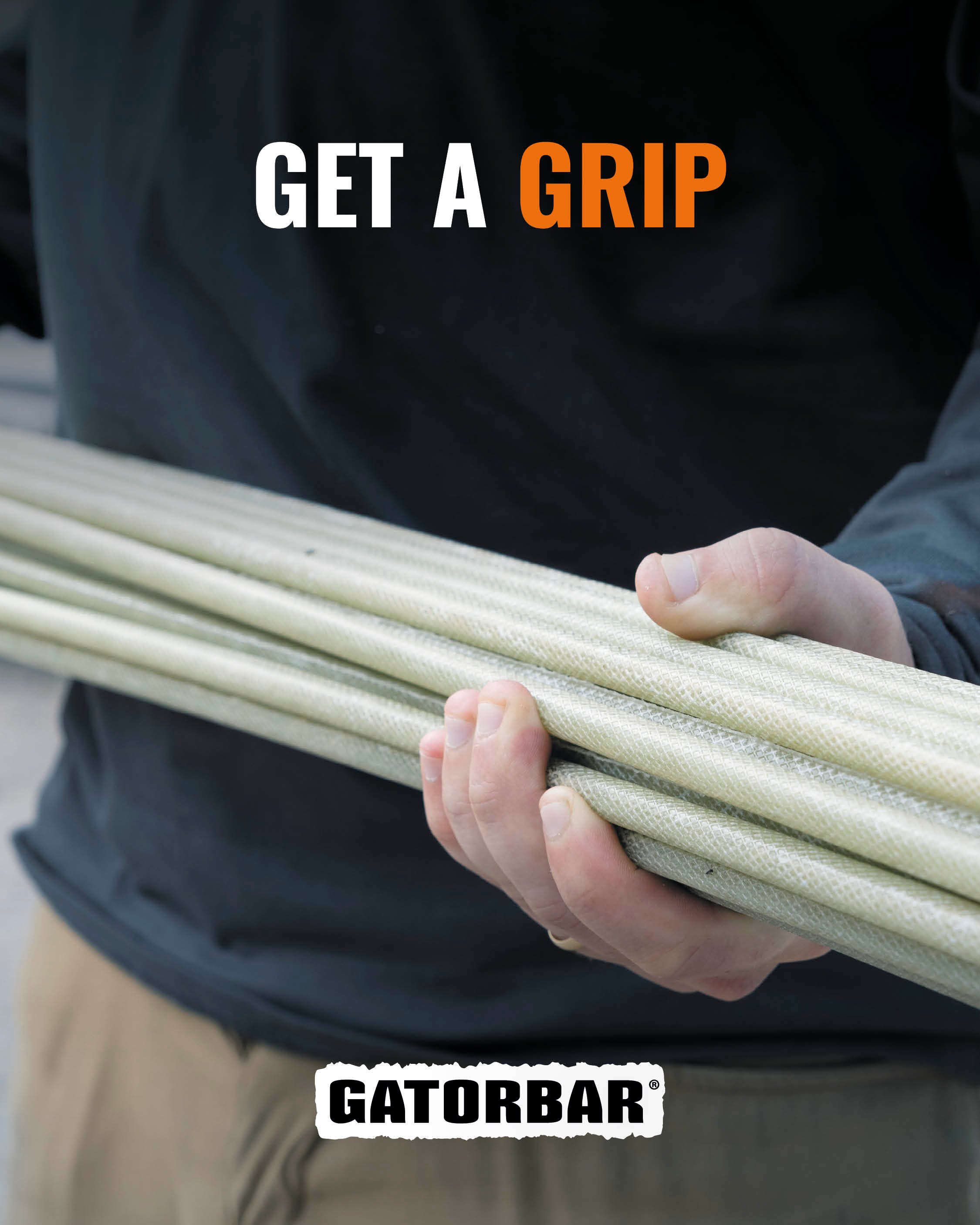
This innovation is built around GatorBar Grip™ technology, which delivers both zero slivers and increased bond strength to concrete. In other words, the same surface characteristics that improve handling and tying also eliminate the fiber strands that cause splinters and eye irritation. For more information, read our GatorBar Grip Announcement.
Instead of accepting slivers as “just part of using fiberglass rebar,” GatorBar redesigned how the bar is manufactured and finished. The fibers are locked in and protected so they don’t fray during normal handling, loading, unloading, or tying. Crews can grab, move, and place bars without worrying that every touch might end in a sliver.
From a risk-management perspective, that’s a big deal. Traditional FRP manufacturers often focus on structural performance alone. GatorBar went further and challenged the assumption that composite rebar has to be uncomfortable or risky to work with. That’s what makes GatorBar different—not just another fiberglass bar, but a safety-focused upgrade to the entire category.
For contractors bidding work, “sliver-free” is a simple message that resonates with both field leaders and safety managers: you get the strength and corrosion resistance of composite rebar, without the hidden costs of minor injuries and complaints.
Lower Risk and Liability for Contractors, Crews, and Homeowners
Every glass sliver that ends up in a worker’s hand or a homeowner’s eye is more than a nuisance—it’s potential liability. By using sliver-free GatorBar, you eliminate a known hazard, which in turn minimizes risk, documentation headaches, and exposure to claims.
Consider how fiberglass is typically handled. Safety resources emphasize eye protection, gloves, and respirators when handling because fiberglass slivers can irritate skin, eyes, and respiratory systems. If someone—especially a homeowner or bystander—handles bare composite rebar without PPE, the risk of slivers rises quickly.
Contractors understand this clearly. By choosing GatorBar for its sliver-free design, they help reduce liability for both employees and the homeowners they serve. That’s not an abstract safety slogan—it’s a practical way to eliminate a source of injury.
One GatorBar contractor shared an example from the field: a homeowner once moved a competitor’s composite rebar while the contractor was off the jobsite. The individual grabbed the rebar without gloves, got slivers in their hands, and then rubbed their eyes—resulting in irritation for the next two days. That situation could easily have turned into a medical bill, a claim, or at minimum a damaged relationship with the client.
With GatorBar, those specific sliver-related scenarios simply don’t exist. When you choose the only sliver-free rebar on the market, you’re not just buying material—you’re buying fewer incident reports, fewer angry phone calls, and a safer environment for everyone who sets foot on or near your projects.
Real-world Contractor Stories: Why Pros Are Switching to GatorBar
Contractors across the country are blunt about why they’ve been cautious about fiberglass rebar in the past: safety. GatorBar’s sliver-free design directly answers the concerns they’ve seen up close on real jobs.
Tim from Encore Concrete in Houston summed up his crew’s hesitation before GatorBar Grip: “we wanted to use GatorBar but didn’t because of the safety issue, guys got the dust in their eyes, shoulder and hands.” That single sentence captures the core problem with traditional composite bars—fine fibers and dust that find their way into exposed skin and eyes when you’re cutting, carrying, and tying bar all day long.
When those minor injuries stack up, crews push back on the material, no matter how strong or light it is. That’s exactly why GatorBar invested in a sliver-free solution. By removing the sliver and dust issue at the source, contractors can finally access the benefits of composite rebar without fighting their own workforce’s valid safety concerns.
MJ’s Concrete is another example. They’re currently evaluating GatorBar, with interest driven by its sliver-free design and the potential to reduce liability for both their employees and the homeowners they serve. Instead of having to explain why gloves are needed to handle certain composite bars, they see an opportunity to simplify the jobsite and focus on quality work and a clean handoff.
These stories show a pattern: contractors weren’t rejecting composite rebar because it was composite—they were rejecting the slivers, dust, and injuries that came with it. GatorBar is the inflection point that keeps the performance and drops the pain.
Safety, Productivity, and Morale Gains from Sliver-free Rebar
When you take slivers off the table, you don’t just improve safety metrics—you improve how the whole crew feels about the work. Sliver-free GatorBar directly supports jobsite efficiency and morale, which ultimately shows up in your schedule and bottom line.
With GatorBar’s zero-sliver design, the risk profile changes. Crews still need to follow general jobsite PPE standards, but they’re no longer battling constant splinters from the bar itself. That means fewer interruptions for first-aid, less rework caused by irritated and distracted workers, and smoother coordination between trades.
Morale rises too. Nobody likes going home with itchy arms or slivers in their hands from “that new rebar.” When workers see that you’ve chosen a product specifically to keep them safer and more comfortable, it sends a clear signal: you’re willing to invest in their well-being. That message matters in a tight labor market where experienced concrete crews have options.
On top of that, GatorBar still delivers all of the classic composite advantages—no rust, reduced weight, and strong tensile performance—without forcing crews to “pay” for those benefits with constant irritation. Safety and performance finally move in the same direction.
How to Start Using GatorBar on Your Next Project
If you’re ready to cut jobsite injuries and liability tied to fiberglass slivers, integrating sliver-free GatorBar into your next pour is straightforward. You can treat it like a structural upgrade that also serves as a safety upgrade—without adding steps to your process.
First, identify projects where crew exposure is highest—sidewalks, driveways, parking lots, or residential work where homeowners may handle materials. Anywhere untrained people might touch exposed rebar is a prime candidate for GatorBar, because sliver-free handling dramatically lowers the chance of complaints or injury.
Next, talk with a dealer near you about GatorBar’s available bar sizes and ICC-ESR certified properties. This makes it easy to substitute GatorBar into existing designs while improving both constructability and safety.
Finally, make sure the change is clear to your crew and your customers. Let them know you’re using GatorBar because it’s sliver-free and helps reduce the risk of handling-related injuries that can come with some composite bars. It’s a practical choice focused on safety, consistency, and getting the job done right.
Eliminate liability and reduce jobsite injuries by using GatorBar—the only sliver-free rebar on the market.