.png?width=940&height=788&name=American%20Made%20(1).png)
saltwater
How Saltwater Causes Concrete Deterioration

GatorBar
How Saltwater Causes Concrete Deterioration
7:09
Concrete is often viewed as one of the most durable building materials available. Yet in marine environments, even well-designed structures face a constant battle against moisture, salt, and time.
From docks and boat ramps to seawalls and bridge decks, marine concrete is exposed to some of the harshest conditions in construction. Over time, saltwater can accelerate concrete deterioration, damage reinforcement, and significantly shorten the lifespan of a structure if the right materials are not used.
Understanding how saltwater affects concrete and reinforcement helps engineers and contractors like you, who are looking to build structures that last.
Why Marine Environments Are So Demanding
Marine construction presents a unique combination of challenges. Structures are regularly exposed to:
- Saltwater immersion
- Splash and tidal zones
- High humidity
- Temperature fluctuations
- Freeze-thaw cycles in colder climates
While concrete itself is highly durable, it is not completely impermeable. Over time, water and dissolved salts can penetrate the concrete surface and begin affecting the materials within.
The result is often corrosion in concrete, one of the leading causes of structural damage in marine infrastructure.
How Corrosion Causes Concrete Deterioration
One of the biggest misconceptions about concrete deterioration is that it starts at the surface.
In many cases, the damage begins inside the structure.
When steel reinforcement corrodes, rust forms on the surface of the rebar. Rust occupies significantly more volume than the original metal. As corrosion continues, the expanding rust creates internal pressure within the concrete.
This process can lead to:
- Hairline cracking
- Rust Staining
- Spalling
- Delamination
- Reduced structural capacity
- Costly repairs and maintenance
Over time, sections of concrete may break away completely, exposing even more reinforcement to moisture and accelerating the cycle.
For marine structures, this can become a significant safety and maintenance concern.
Why Saltwater Is So Damaging to Concrete
The primary threat to reinforced concrete in marine environments is chloride intrusion.
Chlorides are salts naturally present in seawater. As saltwater penetrates the concrete, chloride ions travel through the material and eventually reach the embedded reinforcement.
Once enough chlorides accumulate around traditional steel rebar, the protective layer surrounding the steel begins to break down. Corrosion starts, and the deterioration process accelerates.
This is why marine concrete structures often experience damage even when the concrete itself initially appears sound.
Freeze-Thaw Cycles Make the Problem Worse
In many coastal regions, saltwater exposure is combined with freeze-thaw conditions.
Water enters small pores and cracks in the concrete. When temperatures drop, that water freezes and expands. Repeated freezing and thawing create internal stresses that weaken the concrete over time.
When corrosion and freeze-thaw damage occur together, deterioration can accelerate dramatically.
This combination is particularly common in:
- Boat ramps
- Bridge decks
- Seawalls
- Waterfront walkways
- Coastal infrastructure
The True Cost of Corrosion
The impact of corrosion extends far beyond visible cracking.
Many owners focus on initial construction costs, but the long-term lifecycle costs of marine structures are often much higher.
Corrosion-related damage can result in:
- Frequent repairs
- Traffic or facility disruptions
- Structural rehabilitation projects
- Premature replacement
- Increased maintenance budgets
For public infrastructure, municipalities and transportation agencies often spend billions of dollars each year addressing corrosion-related deterioration in the United States alone.
As a result, engineers increasingly focus on designing structures that resist corrosion from the beginning rather than managing the consequences later.
Reinforcement Strategies for Marine Concrete
Because corrosion is often the root cause of concrete deterioration in marine environments, reinforcement selection plays a critical role in long-term performance.
Historically, steel rebar has been the standard reinforcement material for concrete construction. While steel provides excellent tensile strength, it remains vulnerable to chloride-induced corrosion.
To improve durability, some projects utilize coatings, sealants, or specialty concrete mixes. While these measures can help slow deterioration, they do not eliminate the underlying risk associated with steel corrosion.
That has led many engineers to consider alternative reinforcement materials designed specifically for demanding environments.
Using FRP Rebar in Marine & Waterfront Applications
One of the most effective ways to combat corrosion in concrete is to use reinforcement that does not corrode.
Corrosion resistant rebar helps eliminate the expansion and internal pressure that cause many forms of concrete deterioration.
Among the most effective solutions available today is fiberglass reinforced polymer (FRP) rebar.
Unlike steel, FRP rebar:
- Does not rust
- Is not affected by chlorides
- Will not expand due to corrosion
- Maintains long-term durability in marine environments
- Reduces heat transfer and thermal movement within concrete.
By removing one of the primary causes of concrete deterioration, corrosion-resistant reinforcement can significantly extend the service life of a structure. Read our recent blog post for an in-depth comparison of FRP Rebar vs Steel Rebar.
Building Marine Structures for the Long Haul
Marine construction demands materials capable of performing under constant exposure to saltwater and harsh environmental conditions.
That's why many contractors and engineers are turning to fiberglass reinforcement solutions like GatorBar for waterfront applications.
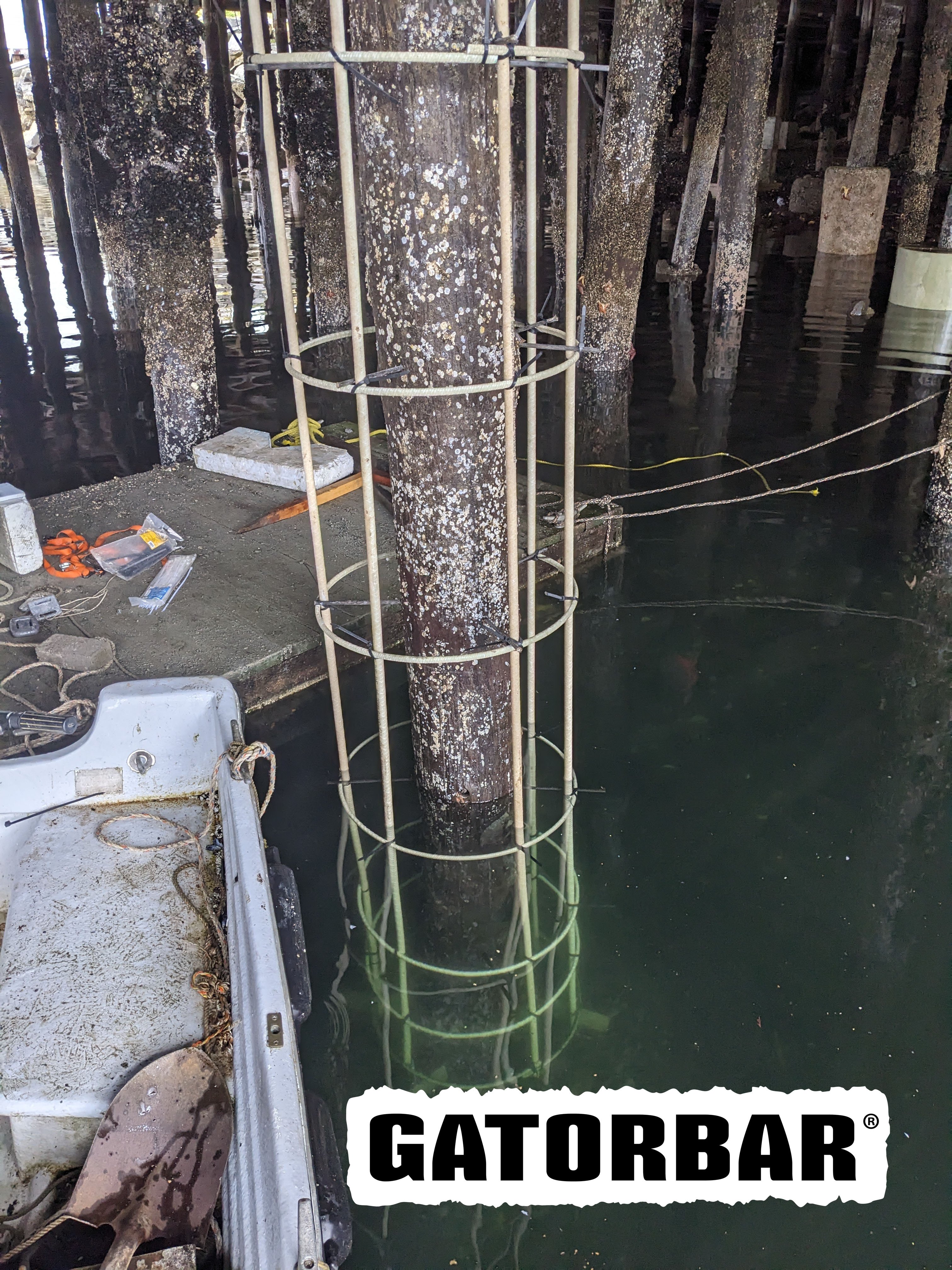
GatorBar's corrosion-resistant FRP rebar is designed to help protect marine concrete from the inside out. Whether used in docks, boat ramps, seawalls, bridge decks, or other waterfront structures, it eliminates the corrosion concerns associated with traditional steel reinforcement.
Learn more about GatorBar's solutions for marine construction on our Marine & Waterfront page.
Stronger Concrete Starts with Smarter Reinforcement
Saltwater is one of the most aggressive forces acting on concrete structures. Through chloride intrusion, corrosion, freeze-thaw damage, and long-term environmental exposure, marine environments can dramatically shorten the lifespan of reinforced concrete.
But concrete deterioration is not inevitable.
By understanding how corrosion develops and selecting reinforcement materials designed to resist it, engineers and contractors can build structures that require less maintenance, last longer, and deliver greater value over their lifetime.
For marine concrete applications, smarter reinforcement choices today can help prevent costly problems tomorrow.
.png?width=2240&height=1260&name=GFRP%20Rebar%20for%20Agricultural%20Concrete%20(1).png)