.png?width=940&height=788&name=%235%20Fiberglass%20Rebar%20(1).png)
.png?width=940&height=788&name=American%20Made%20(1).png)
FRP Rebar vs Steel Rebar

GatorBar
Which is Best for Your Concrete Project in 2026?
Choosing the right reinforcement for your concrete project can determine its longevity, maintenance costs, and structural performance for decades to come. For over 100 years, steel rebar has been the industry standard, but it comes with serious drawbacks, particularly corrosion and heavy weight.
Enter FRP (fiber-reinforced polymer) rebar: a game-changing alternative that's lighter, stronger in tension, and completely corrosion-resistant.
Whether you're working on slabs-on-grade, bridge decks, parking structures, or coastal infrastructure, understanding the differences between FRP rebar and steel rebar will help you make the smartest choice for durability, cost-efficiency, and sustainability.
What is FRP Rebar?
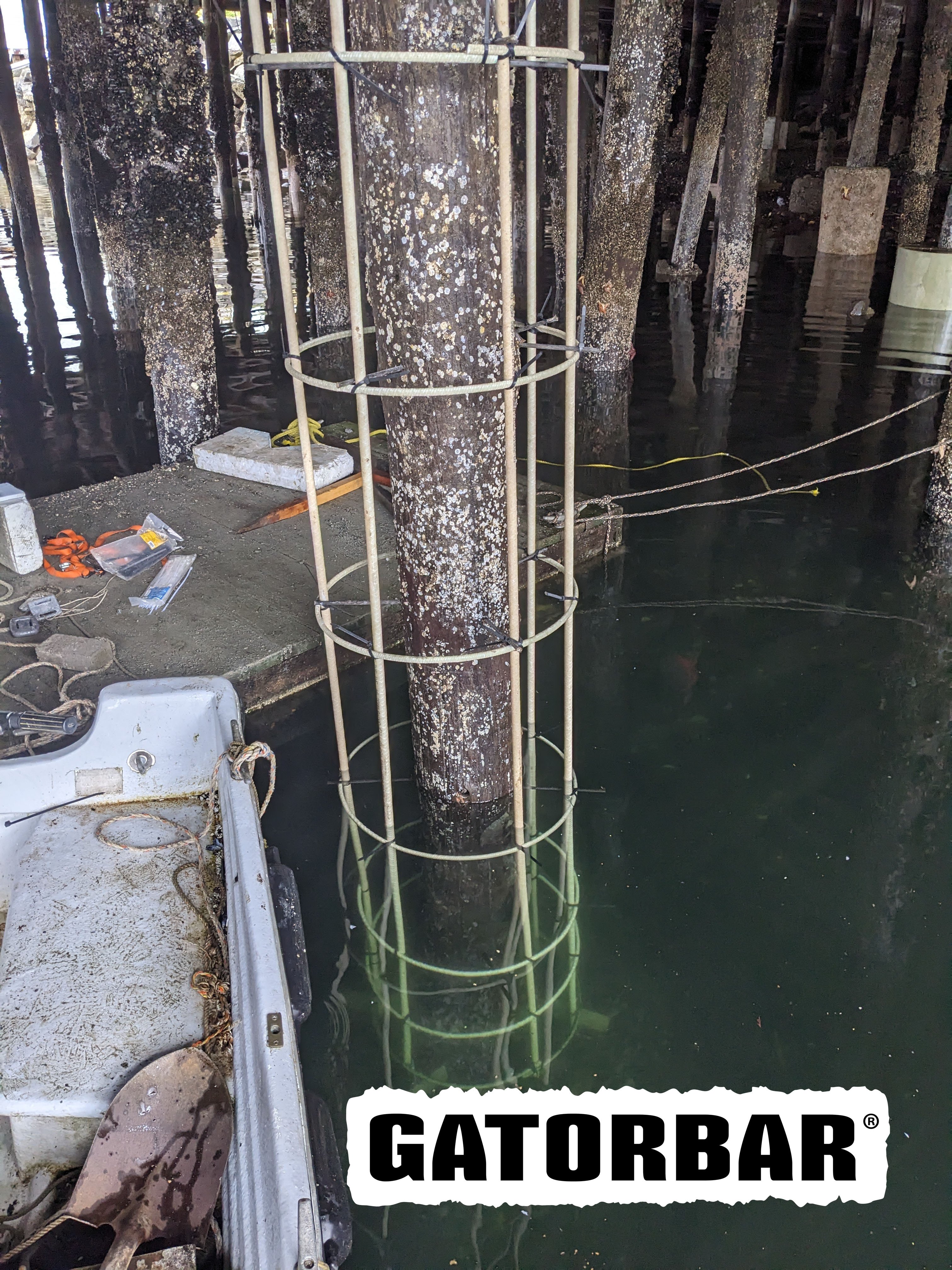
FRP rebar (including GFRP and BFRP) is made from high-strength glass or basalt fibers embedded in a polymer resin matrix. Unlike steel, FRP does not rust, is significantly lighter, and offers exceptional tensile strength, making it ideal for corrosive environments and applications where weight reduction is critical.
Key Differences: FRP Rebar vs Steel Rebar
1. Corrosion Resistance. Steel corrodes when exposed to moisture, salt, and chemicals-leading to concrete cracking, spalling, and costly repairs. FRP rebar is will not rust, extending structure lifespan up to four times longer and drastically reducing maintenance
Winner: FRP rebar
2. Weight and Installation Efficiency. Steel is heavy and labor-intensive. FRP rebar weighs up to 75% less than steel, making it easier to transport, handle, and install.
Winner: FRP rebar
3. Environmental Impact and Sustainability. FRP has a smaller carbon footprint than steel and can help projects achieve higher LEED and ISI Envision ratings.
Winner: FRP rebar
4. Tensile Strength. GatorBar FRP rebar delivers guaranteed tensile strengths ranging from 129 KSI to 155 KSI. This makes FRP ideal for applications requiring high tension resistance.
Winner: FRP rebar (in tension)
5. Modulus of Elasticity (Stiffness). FRP has a lower modulus of elasticity than steel, meaning it's less stiff. However, for slabs-on-grade and flatwork, this is actually beneficial.
Winner: Depends on application (FRP excels in slabs; steel in high-deflection zones)
6. Code Compliance. Steel is governed by ACI 318; FRP follows ACI 440.1R, which accounts for its unique properties.
Winner: Both (application-dependent)
Top Strengths of FRP Rebar
- Rust-free: Reduces concrete cracking and spalling
- Up to 75% lighter than steel: faster, safer installation
- High tensile strength: superior performance under tension
- Environmentally friendly: supports green building certifications
- Lower life-cycle costs: reduced maintenance and longer service life
- Design versatility: bundling options for optimized performance
Top Strengths of Steel Rebar
- High stiffness and ductility: ideal for seismic zones
- Established in ACI 318: widely accepted and understood
- Readily available: universal supply chain
However, steel's biggest weakness, corrosion, remains its Achilles' heel.
When to Choose FRP Rebar Over Steel
FRP rebar is the superior choice for:
- Slabs-on-grade and flatwork
- Bridge decks and parking structures
- Coastal and marine environments
- Wastewater treatment facilities
- Projects prioritizing sustainability and LEED certification
- Any application where corrosion is a concern
The Future is FRP Rebar
While steel rebar has served the construction industry well for over a century, FRP rebar represents the future of concrete reinforcement. It's lighter, stronger in tension, corrosion-proof, and more sustainable - validated by extensive internal testing and real-world performance.
By choosing GatorBar FRP rebar, contractors and engineers can:
-
Reduce long-term maintenance costs
-
Extend structure lifespan by up to 4x
-
Simplify installation and reduce labor
-
Build greener, more durable infrastructure
Ready to Make the Switch? Contact GatorBar today to discuss your project and discover how FRP rebar can save you time, money, and headaches.
Download our technical white papers to discover the performance advantages and technical specifications of GatorBar FRP rebar. This white paper about the advantages of bundling FRP rebar is a great resource.
FAQs: FRP Rebar vs Steel Rebar
Q: Is FRP rebar more expensive than steel?
A: Upfront cost of FRP is often less expensive or cost-competitive in most markets, but FRP’s corrosion resistance and reduced maintenance lead to significant long-term savings.
Q: Can FRP rebar replace steel in all applications?
A: FRP excels in flatwork, slabs, and corrosive environments. For high-deflection or seismic applications, consult an engineer.
Q: Is FRP rebar code-compliant?
A: Yes! FRP is governed by ACI 440.1R and is widely accepted for appropriate applications.