
FRP Rebar in Precast Manufacturing

GatorBar
Why GatorBar Is Built for the Next Generation of Concrete
Precast manufacturers are under pressure from every angle: tighter production schedules, labor constraints, durability expectations, and rising demand for better-performing concrete products.
That is exactly why producers are taking a hard look at FRP rebar in precast manufacturing.
At GatorBar, we believe reinforcement should do more than simply replace steel. It should help manufacturers move faster, handle materials more easily and reduce corrosion-related risk. These mechanical, chemical, and economic advantages will bring long term value to precast concrete products.
Top 4 Reasons to Switch to FRP Reinforcement in Precast Products:
-
Corrosion Resistance.
-
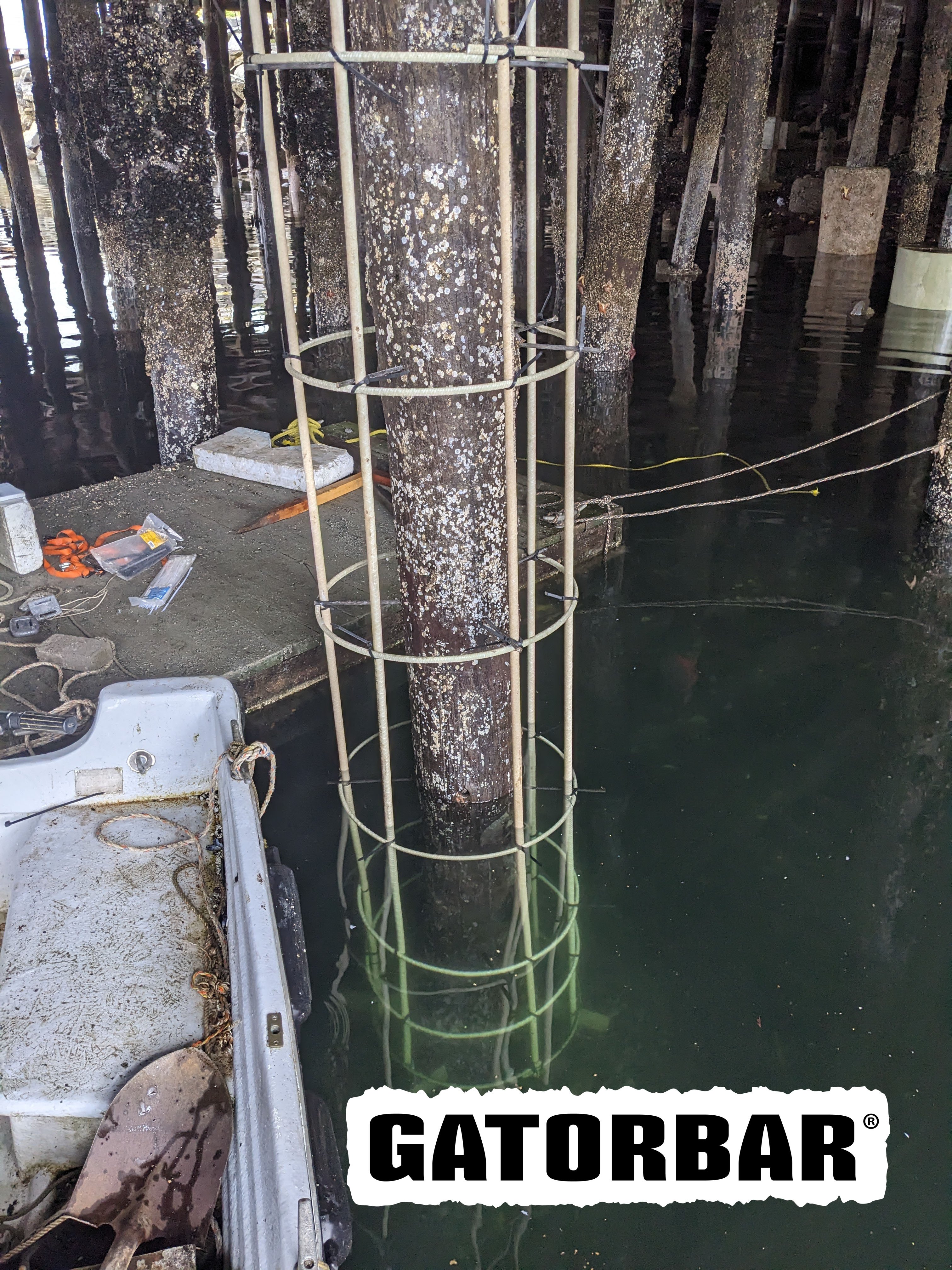
Elimination of Spalling: Precast products in aggressive environments will not suffer from corrosion or rust bursting. Typical applications include marine seawalls, wastewater tanks, utility vaults, bridge deck panels, and road barriers.
-
Extended Service Life: Structures frequently achieve longer lifespans with published reports show 2-3x longer life with virtually zero structural maintenance or corrosion mitigation requirements. Who doesn’t want a product that will last a lifetime?
-
-
Thinner Concrete Cover & Reduced Weight
-
Reduced Cover Requirements: Steel requires concrete cover (often 50–75 mm) primarily to prevent moisture and chloride intrusion from reaching it. FRP rebar does not corrode so the required cover is determined solely by mechanical bond and fire resistance (often reduced to 20–25 mm).
-
Slender Profiles: Thinner wall profiles and light weight rebar lead to lighter precast segments directly cutting raw material usage.
-
Lower Freight and Rigging Costs: Lighter elements mean more units per truckload and lower crane capacity requirements during installation on-site.
-
-
High Strength to Weight Ratio
-
Tensile Performance: GFRP rebar delivers 2 to 3 times the tensile strength of Grade 60 steel rebar at one-fourth the weight.
-
Ergonomics and Plant Safety: Plant personnel can lift and tie rebar cages with significantly less physical strain, accelerating fabrication turnaround and decreasing workplace injury risks.
-
- Electromagnetic and Thermal Neutrality
- Non-Conductive & Non-Magnetic: Ideal for specialized precast products such as hospital MRI suites, electrical substation pads, transformer vaults, rail guideways, and high-speed toll gantries where steel induces eddy currents or electromagnetic interference.
- Thermal Break Performance: FRP has a fraction of the thermal conductivity of steel, significantly reducing thermal bridging in insulated precast sandwich panels.
- Non-Conductive & Non-Magnetic: Ideal for specialized precast products such as hospital MRI suites, electrical substation pads, transformer vaults, rail guideways, and high-speed toll gantries where steel induces eddy currents or electromagnetic interference.
Design & Handling Considerations of FRP Rebar:
|
Property |
Standard Steel Rebar |
GFRP Rebar |
Impact on Precast |
|
Density |
~7.85g/cm³ |
~ 2.0 - 2.2g/cm³ |
75% lighter cages; faster handling |
|
Tensile Strength |
400-550 MPa |
800-1200+MPa |
2x higher tensile load capacity |
|
Modulus of Elasticity |
~200GPa |
`45-65GPa |
Deflection/crack-width governs design |
|
Field Bending |
Ductile (bendable on site) |
Linear elastic (no field bending) |
Bends/stirrups must be factory-cured |
Connect with an engineer today to discuss your project needs. Visit our project gallery to see some of our precast applications using FRP Rebar.